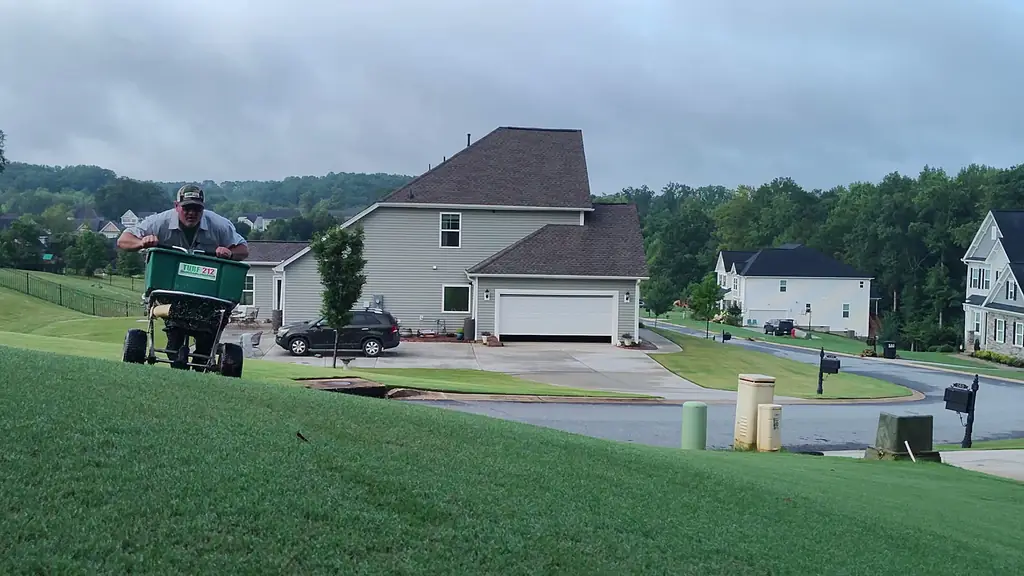
Timing matters more than products. Greenville sits where warm-season and cool-season grasses overlap, so the same treatment can help in April and hurt in July. This calendar follows the schedule our crews actually run across Greenville, Pickens, Spartanburg, Anderson and Laurens counties.
Month 01
January — Dormant season cleanup
- Keep leaves and debris off dormant turf so crowns get light and airflow.
- Service the mower, sharpen blades, and pull a soil sample for testing.
- Spot-treat winter weeds like chickweed, henbit and annual bluegrass on mild days above 50°F.
Month 02
February — First pre-emergent window
- Apply pre-emergent before soil temps hit 55°F — usually mid-to-late February in the Upstate.
- Apply lime if your soil test shows pH below 6.0 (common in Greenville's clay soils).
- Fescue lawns get a light late-winter feeding to push spring root growth.
Month 03
March — Spring green-up begins
- Second pre-emergent application to extend crabgrass control through early summer.
- Start mowing fescue at 3.5–4 inches as growth resumes.
- Post-emergent broadleaf weed control while weeds are small and actively growing.
Month 04
April — Warm-season wake-up
- Bermuda and Zoysia break dormancy — first fertilization once the lawn is 50% green.
- Scalp and dethatch warm-season lawns to remove winter thatch.
- Watch for spring dead spot and large patch in Zoysia and treat at first sign.
Month 05
May — Peak growth for Bermuda & Zoysia
- Regular fertilization on warm-season turf every 4–6 weeks through summer.
- Begin fire ant treatments before mounds multiply in the heat.
- Start mosquito control around shaded beds, downspouts, and standing water.
Month 06
June — Heat and humidity stress
- Raise fescue mowing height to 4 inches and water deeply 1–1.5 inches per week, early morning.
- Preventive fungicide on fescue — brown patch shows up when nights stay above 68°F.
- Grub prevention application for lawns with a history of damage.
Month 07
July — Protect, don't push
- No nitrogen on fescue — feeding in July's heat invites disease.
- Keep warm-season turf fed and spot-treat nutsedge and crabgrass escapes.
- Continue fungicide rotation and monitor irrigation for dry spots.
Month 08
August — Plan the fall renovation
- Schedule core aeration and overseeding now — September slots fill fast in Greenville.
- Final summer fertilization for Bermuda and Zoysia.
- Second fire ant treatment and continued mosquito service.
Month 09
September — Fescue aeration & overseeding — the big one
- Core aerate and overseed fescue mid-to-late September, when soil temps sit near 70°F.
- Apply starter fertilizer with the seed; skip pre-emergent on newly seeded areas.
- Keep new seed consistently moist with short, frequent watering for 3 weeks.
Month 10
October — Establish and feed
- Feed new fescue seedlings 4–6 weeks after germination.
- Fall pre-emergent on established lawns to block annual bluegrass and winter weeds.
- Apply lime if fall soil testing calls for it.
Month 11
November — Winterize
- Final fescue feeding for winter color and root storage.
- Post-emergent control of winter broadleaf weeds while temperatures stay above 50°F.
- Keep leaves cleared so new seedlings keep getting sunlight.
Month 12
December — Rest and reset
- Mow fescue as needed; warm-season lawns are fully dormant.
- Avoid heavy traffic on frozen or dormant turf.
- Review the season, soil test results, and book next year's program.
Frequently asked questions
- When should I apply pre-emergent in Greenville, SC?
- Apply the first pre-emergent in mid-to-late February, before soil temperatures reach 55°F, then a second application in March to extend crabgrass control into early summer.
- When is the best time to overseed fescue in Upstate SC?
- Mid-September through mid-October. Soil is still warm enough for fast germination while cooler air temperatures let seedlings build roots before winter.
- When should I fertilize my lawn in Greenville?
- Fescue is fed in late winter, early spring and fall — never in July heat. Bermuda and Zoysia are fed every 4–6 weeks from late April through August.
- Do Greenville lawns need lime?
- Often yes. Upstate clay soils tend to run acidic, and a soil test showing pH below 6.0 calls for lime, typically applied in February or October.
